-
 moving
Source
moving
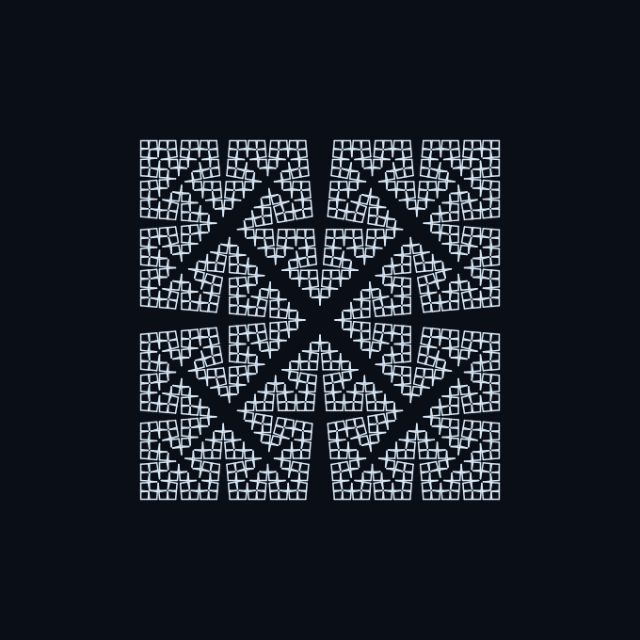
SourceKoch Curves
Nature is an endless combination and repetition of a very few laws.
— Ralph Waldo Emerson, Essays: First Series — History (1841) -
 moving
Source
moving
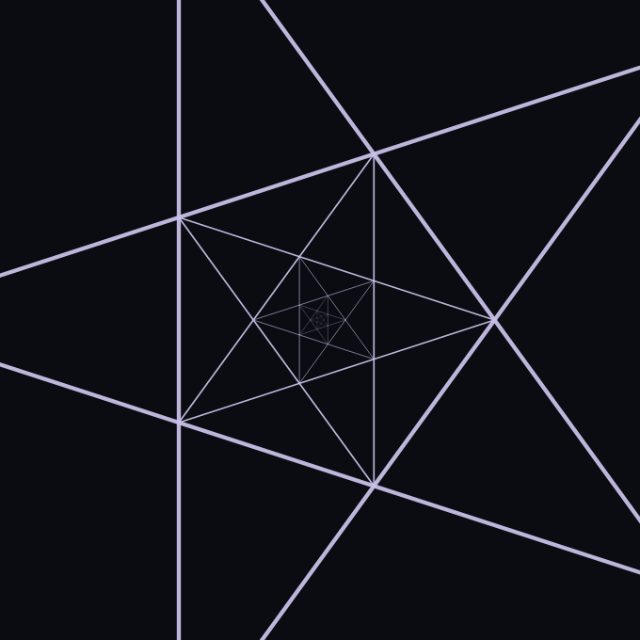
SourceRecursive Pentagram
An infinite sphere whose centre is everywhere and whose circumference is nowhere.
— Blaise Pascal, Thoughts, article I (1670) -
 moving
Source
moving
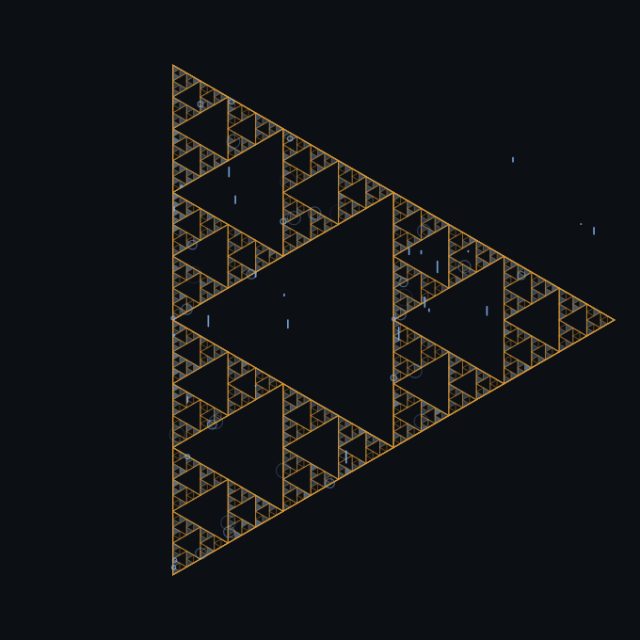
SourceSierpinski Gasket
So, naturalists observe, a flea Has smaller fleas that on him prey; And these have smaller still to bite 'em, And so proceed ad infinitum.
— Jonathan Swift, On Poetry: a Rhapsody (1733) -
 moving
Source
moving
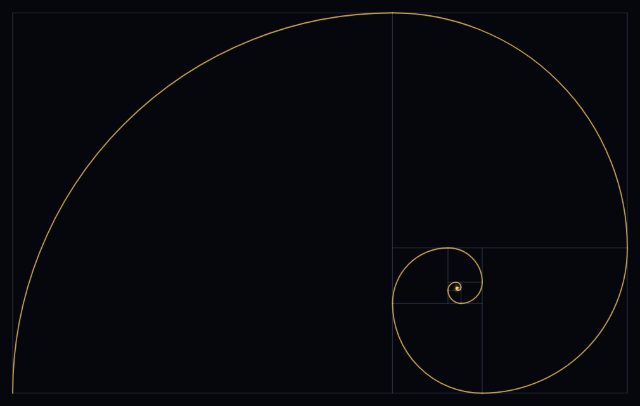
SourceFibonacci Spiral
Changed, I rise again the same.
— Jakob Bernoulli, Epitaph, Basel Minster (1705) -
 moving
Source
moving
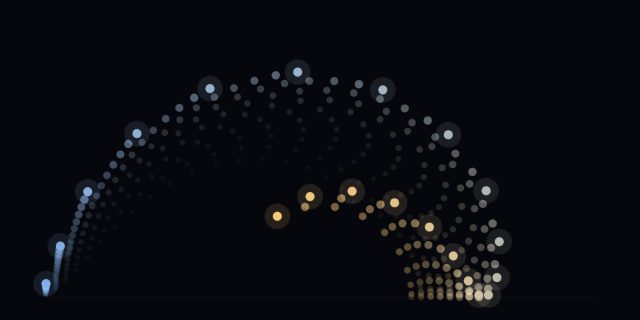
SourceThe Love That Moves
The love that moves the sun and the other stars.
— Dante Alighieri, The Divine Comedy, Paradise XXXIII (1321) -
 moving
Source
moving
SourceUnder the Sun
Nothing new under the sun.
— Clementine Vulgate, Ecclesiastes 1:10 (1592) -
 moving
Source
moving
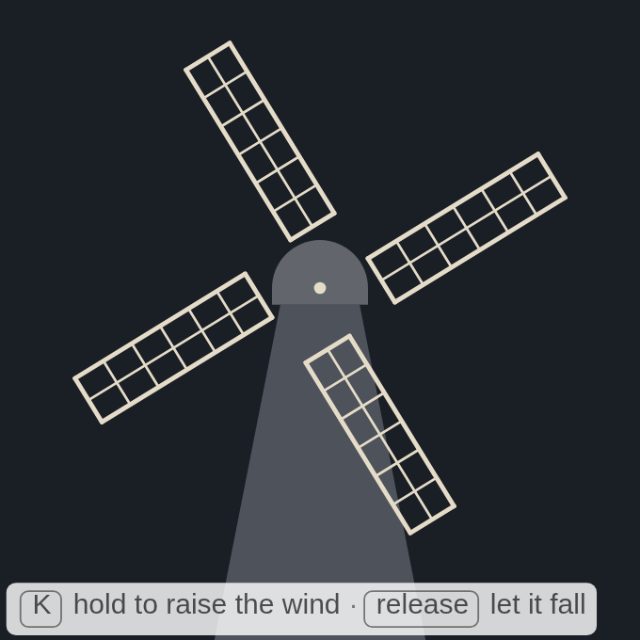
SourceWindmill
Windmills, not giants.
— Miguel de Cervantes, Don Quixote I, chapter VIII (1605) -
 moving
Source
moving
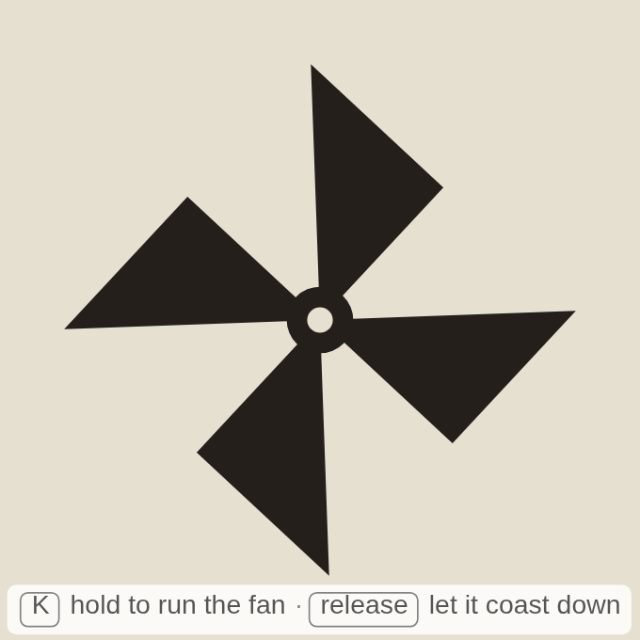
SourceElectric Fan
If every tool could do its own work, at a command or by anticipating what was needed…
— Aristotle, Politics I 1253b -
 moving
Source
moving
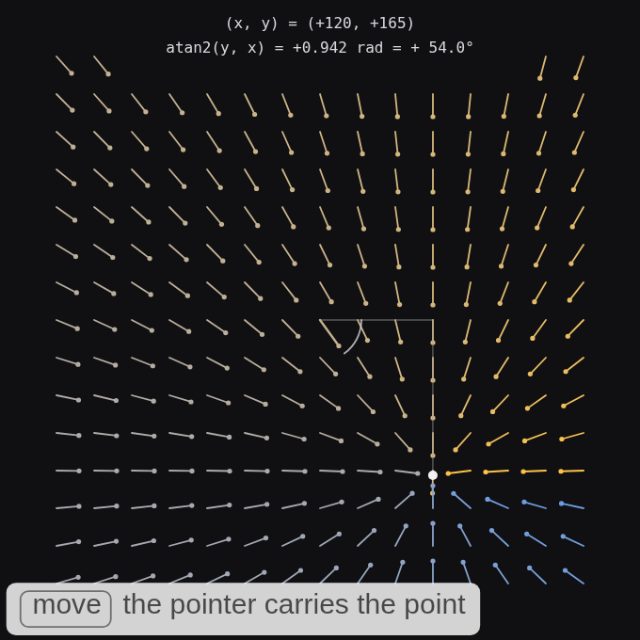
SourceAtan2
Divide each difficulty into as many parts as possible and as necessary to resolve it.
— René Descartes, Discourse on Method, part II (1637) -
 moving
Source
moving
SourceOne Yin, One Yang
One yin, one yang: this is called the Way.
— Commentaries on the Book of Changes, Appended Statements I.5 -
 moving
Source
moving
SourceTemple Bell
The Gion bells echo the passing of all things; the sal trees’ blossoms tell how the mighty must fall.
— The Tale of the Heike, Book I, Gion Monastery -
 moving
Source
moving
SourceTroubling of a Star
And thou canst not stir a flower Without troubling of a star.
— Francis Thompson, The Mistress of Vision (1897) -
 Source
Nautilus
Build thee more stately mansions, O my soul, As the swift seasons roll! Leave thy low-vaulted past!
— Oliver Wendell Holmes, The Autocrat of the Breakfast-Table, chapter IV (1858) -
 moving
Source
moving
SourceAmmonite
Everything changes; nothing perishes.
— Ovid, Metamorphoses XV.165 (8) -
 moving
Source
moving
SourceHerringbone
A harmony that turns back upon itself.
— Heraclitus, Fragment B51, in Hippolytus, Refutation IX.9.2 -
 moving
Source
moving
SourcePinwheel
Order is the arrangement that assigns to things equal and unequal their proper places.
— Augustine of Hippo, The City of God XIX.13 (426) -
 moving
Source
moving
SourceHex Triangle
From six triangles, one equilateral triangle is formed.
— Plato, Timaeus 54e -
 moving
Source
moving
SourceKanizsa Square
The senses do not deceive; judgement deceives.
— Johann Wolfgang von Goethe, Maxims and Reflections (1908) -
 moving
Source
moving
SourceShippō Tsunagi
No eye could ever see the sun without becoming sunlike.
— Plotinus, Enneads I.6.9 -
 moving
Source
moving
SourceNecker Cube
They would take nothing for truth but the shadows of manufactured things.
— Plato, Republic VII 515c -
 moving
Source
moving
SourceHarriss Spiral
Every branch of a plant, every limb of an animal, every drop of its fluids is itself such a garden or pond.
— Gottfried Wilhelm Leibniz, Monadology, 67 (1714) -
 moving
Source
moving
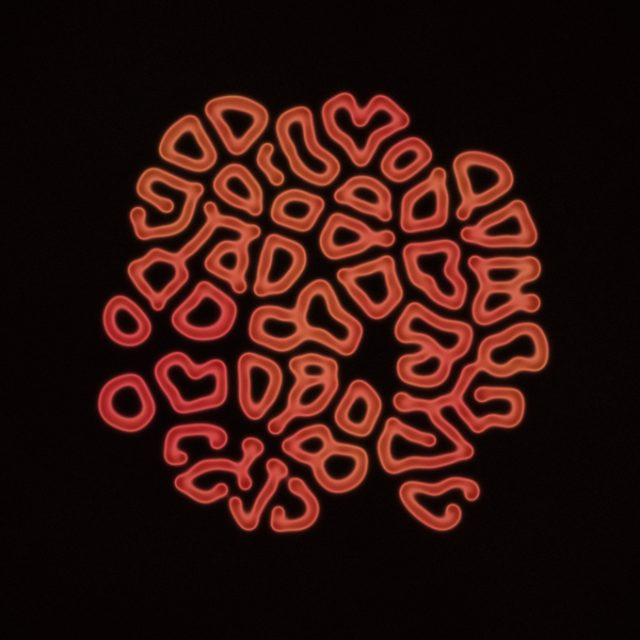
SourceReaction Diffusion Coral
Another reaction system in two dimensions gives rise to patterns reminiscent of dappling.
— A. M. Turing, The Chemical Basis of Morphogenesis (1952) -
 moving
Source
moving
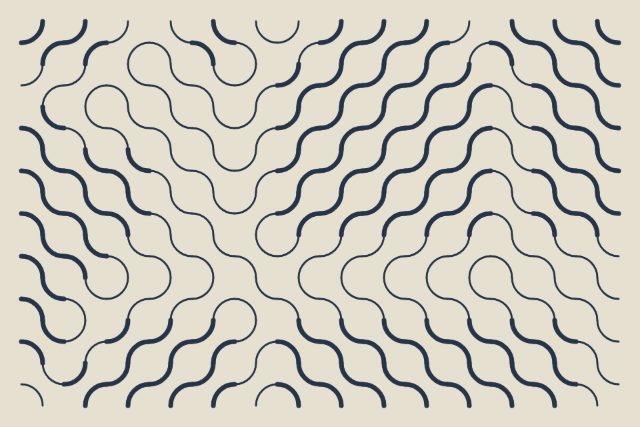
SourceTruchet Tides
The river flows unceasingly, yet its water is never the same. Foam on the pools vanishes and forms, never staying long.
— Kamo no Chōmei, An Account of My Hut (1212) -
 moving
Source
moving
SourceVoronoi Bloom
Scents, colours and sounds answer one another.
— Charles Baudelaire, The Flowers of Evil, Correspondences (1861) -
 moving
Source
moving
SourceClinamen
If atoms never swerved, all would fall like drops of rain through the deep void…
— Lucretius, On the Nature of Things II.221–222 -
 Source
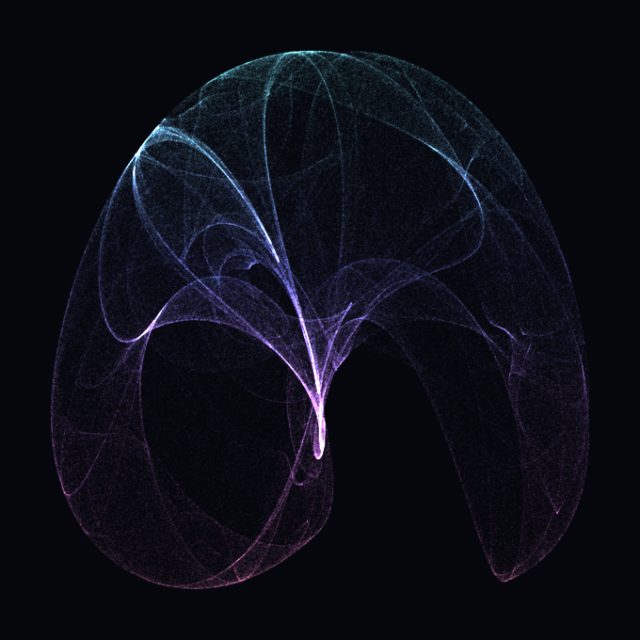
De Jong Attractor
One must still have chaos within to give birth to a dancing star.
— Friedrich Nietzsche, Thus Spoke Zarathustra, Prologue 5 (1883) -
 moving
Source
moving
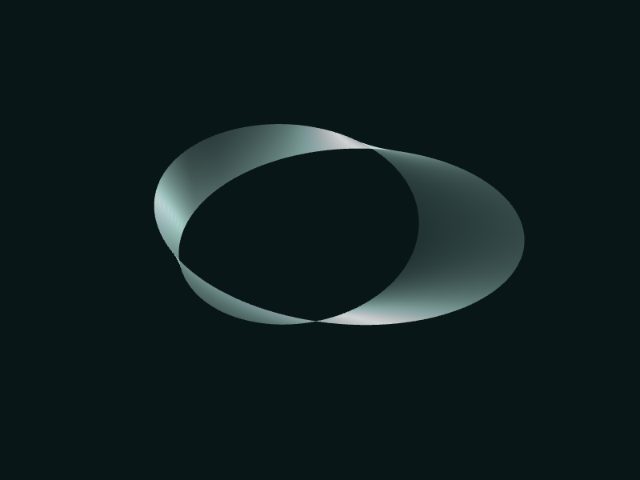
SourceMöbius Band
A one-sided surface is formed, bounded by a single line…
— August Ferdinand Möbius, On Polyhedra and Elementary Transformations (1858) -
 moving
Source
moving
SourceUlam Spiral
There are more prime numbers than any given multitude of primes.
— Euclid, Elements IX.20 -
 moving
Source
moving
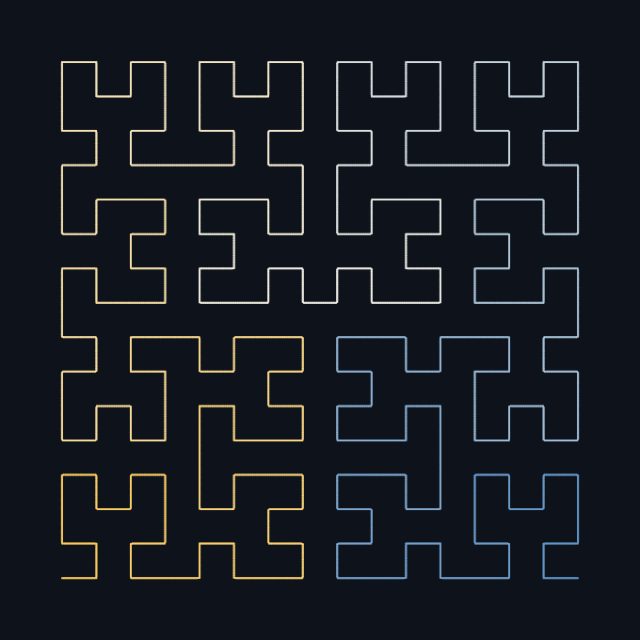
SourceHilbert Curve
A point can move continuously so that, in a finite time, it reaches every point of a region of the plane.
— David Hilbert, Mathematische Annalen 38 (1891) -
 moving
Source
moving
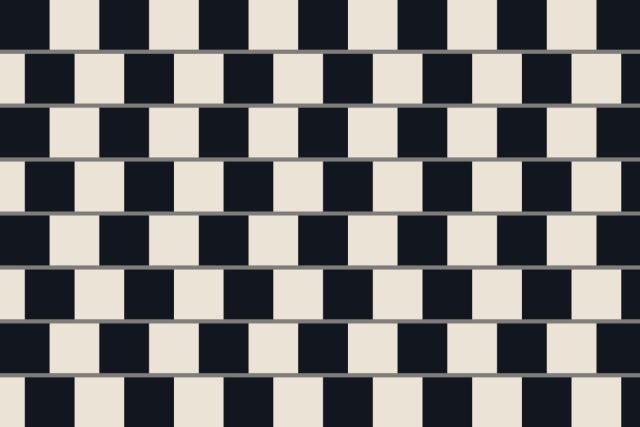
SourceCafé Wall
The eyes cannot know the nature of things.
— Lucretius, On the Nature of Things IV.385 -
 moving
Source
moving
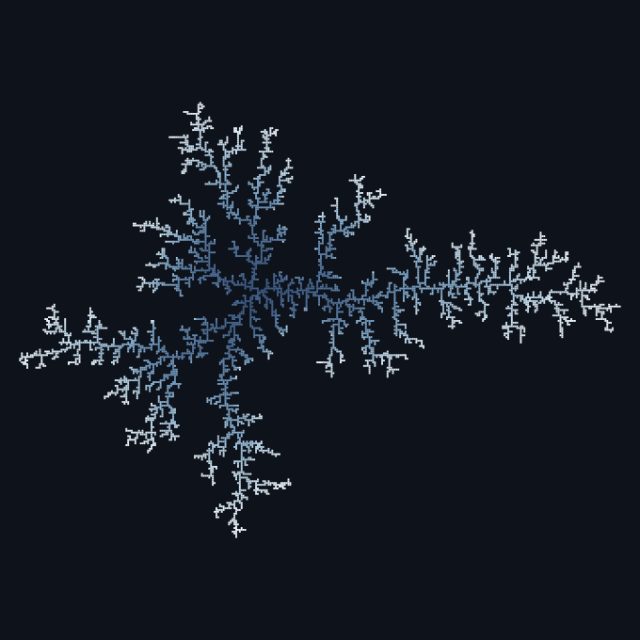
SourceDLA Frost
Why do they not fall with five sides, or seven? Why always six?
— Johannes Kepler, The Six-Cornered Snowflake (1611) -
 moving
Source
moving
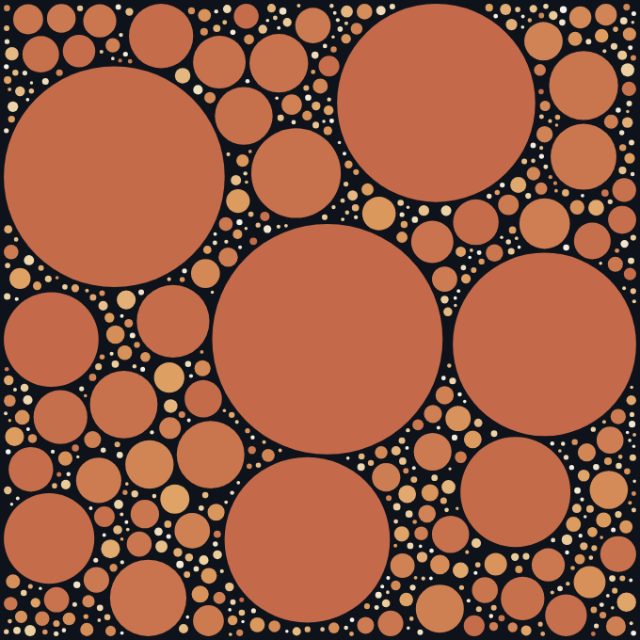
SourceKissing Circles
This makes the theorem more beautiful and more concise…
— René Descartes, Letter to Elisabeth, November 1643 (1643) -
 moving
Source
moving
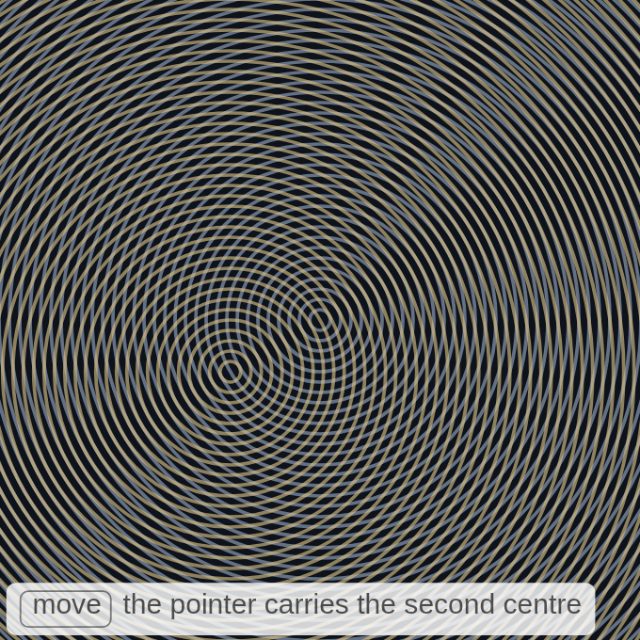
SourceMoiré Rings
Every point of a luminous body—the sun, a candle, a glowing coal—generates waves of which it is the centre.
— Christiaan Huygens, Treatise on Light (1690) -
 moving
Source
moving
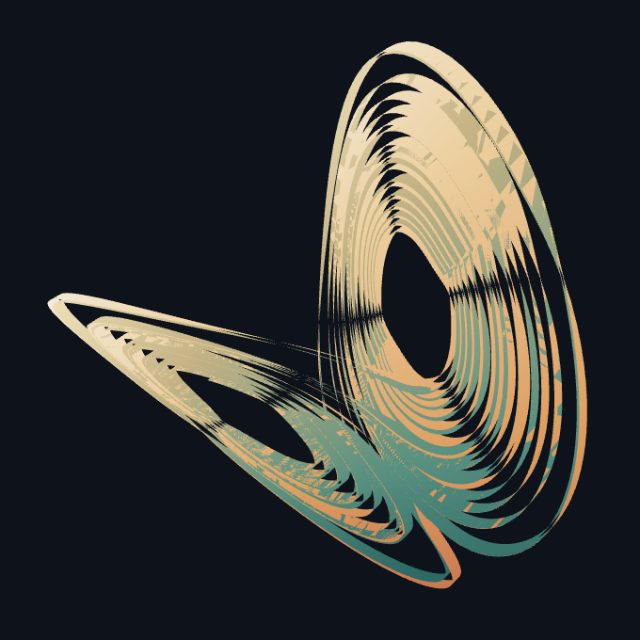
SourceLorenz Ribbons
Small differences in the initial conditions may produce very great differences in the final phenomena…
— Henri Poincaré, Science and Method (1908) -
 moving
Source
moving
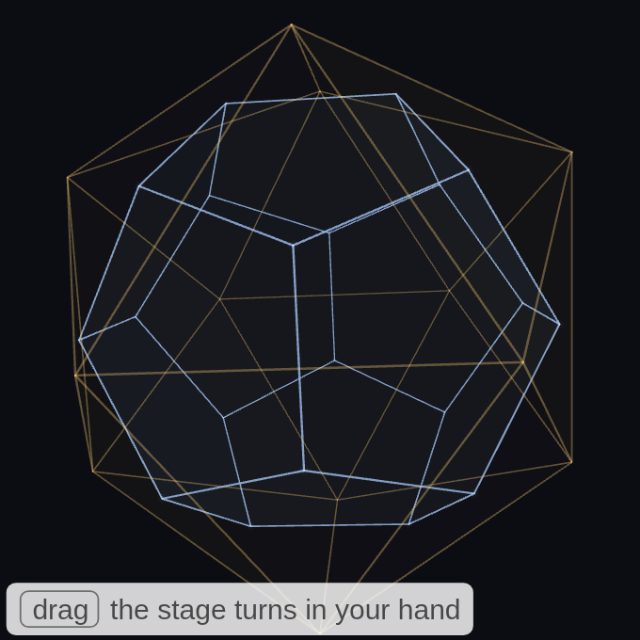
SourcePlatonic Duals
The same circle surrounds the dodecahedron’s pentagon and the icosahedron’s triangle when both solids are inscribed in one sphere.
— Hypsicles, Elements XIV.2 -
 moving
Source
moving
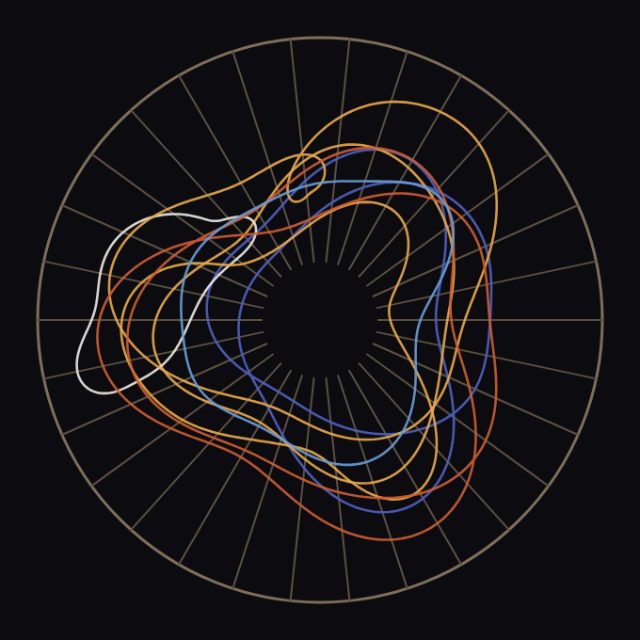
SourceThirty Spokes
Thirty spokes share one hub; it is the emptiness that makes the cart useful.
— Laozi, Tao Te Ching, 11 -
 moving
Source
moving
SourceNo Common Measure
The unreal has no being; the real never ceases to be.
— Bhagavad Gita, The Yoga of Knowledge, 2.16 -
 moving
Source
moving
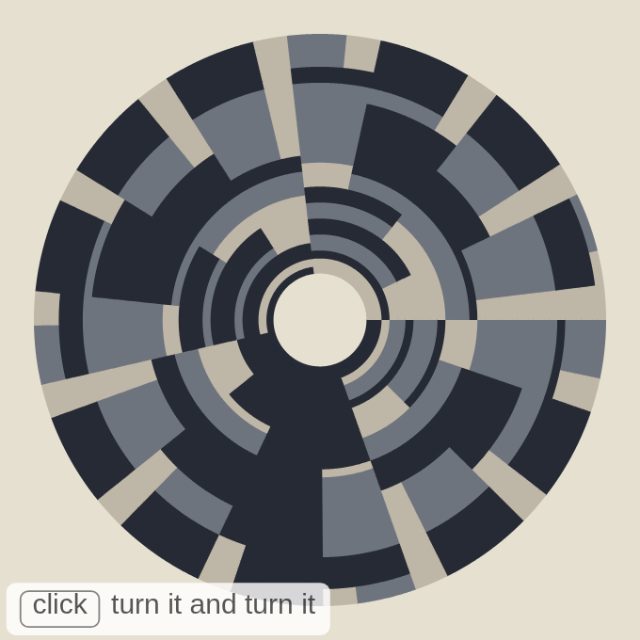
SourceTurn It and Turn It
Turn it and turn it again, for everything is in it.
— Ben Bag Bag, Ethics of the Fathers 5:22 -
 moving
Source
moving
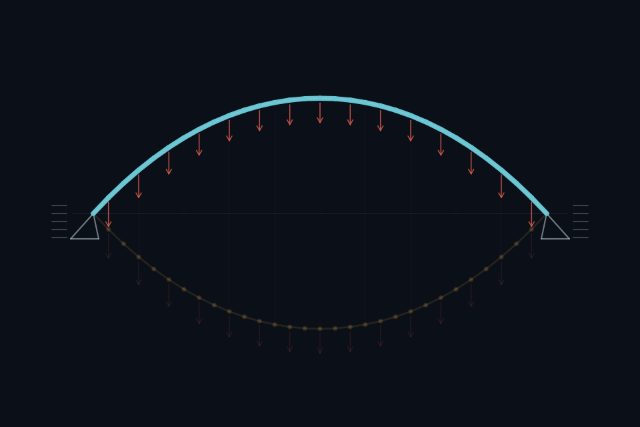
SourceWhat Hangs Stands
As a flexible chain hangs, so, inverted, a rigid arch will stand.
— Robert Hooke, The Life of Dr. Robert Hooke, p. xxi (1705) -
 moving
Source
moving
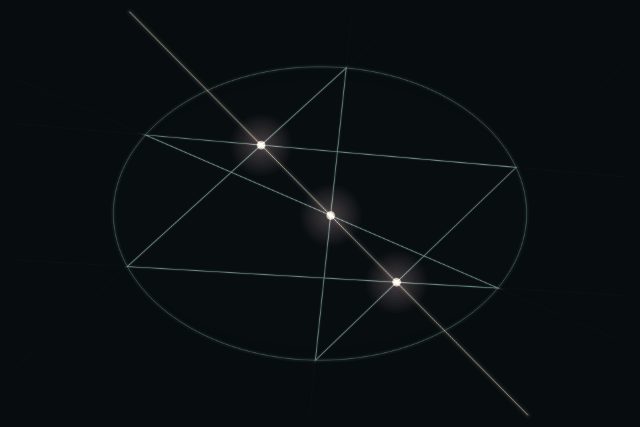
SourceMystic Hexagram
The lines MS, NO and PQ will be of the same order: this will be a third lemma.
— Blaise Pascal, Essay on Conics, third lemma (1640) -
 moving
Source
moving
SourceThe Hat
The stone the builders rejected has become the cornerstone.
— Psalms, Psalm 118:22 -
 Source
The Red and the Black
Suddenly Julien stopped speaking of Napoleon; he announced his plan to become a priest…
— Stendhal, The Red and the Black, chapter V (1831) -
 moving
Source
moving
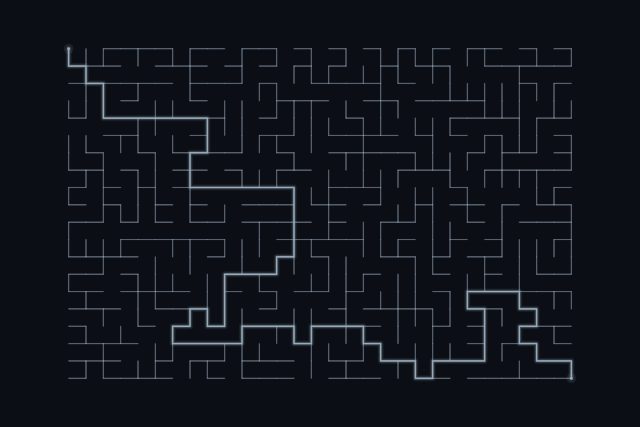
SourceNot Without a Plan
A mighty Maze! but not without a Plan;
— Alexander Pope, An Essay on Man, Epistle I, line 6 (1736) -
 moving
Source
moving
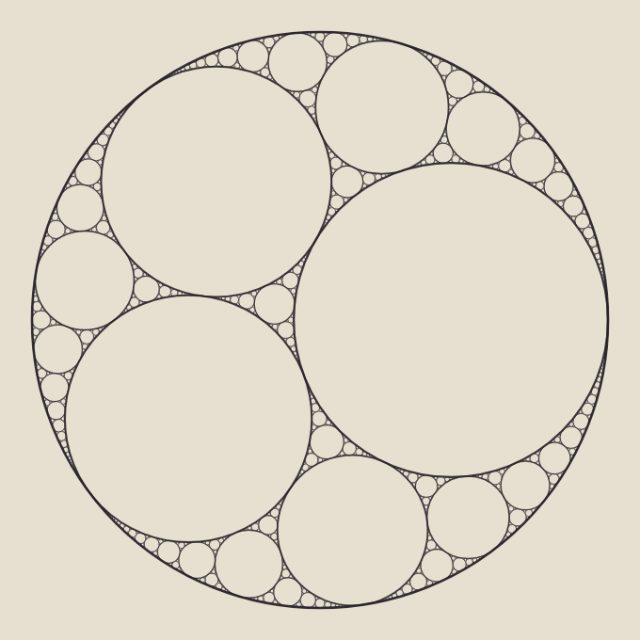
SourceApollonian Gasket
Given any three points, lines or circles, draw a circle through each given point, if any, and tangent to each given line or circle.
— Pappus of Alexandria, Collection VII, §11 -
 moving
Source
moving
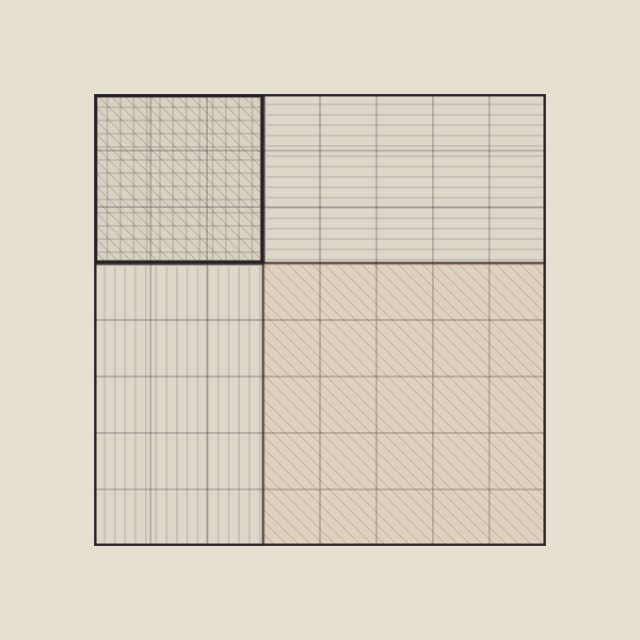
SourceMade Whole
A square and ten of its roots equal thirty-nine dirhams.
— Muhammad ibn Musa al-Khwarizmi, The Compendious Book on Calculation -
 moving
Source
moving
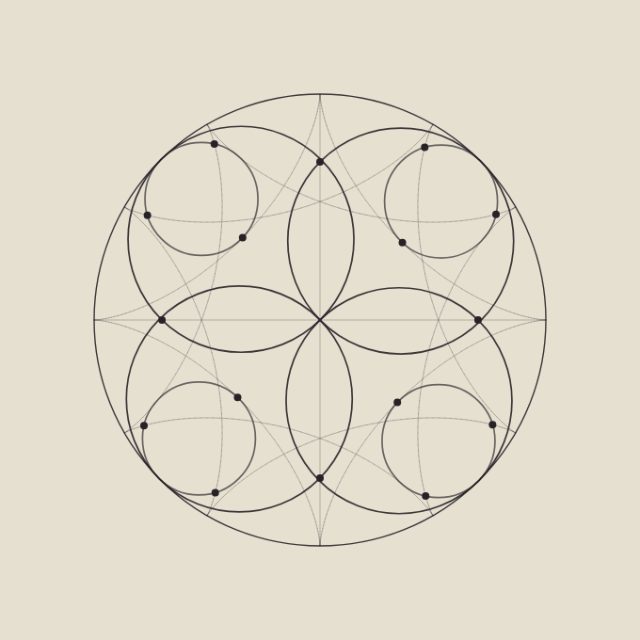
SourceBetween Two Ends
That point moves back and forth along the diameter of the larger circle through the initial point of contact.
— Nasir al-Din al-Tusi, Memoir on Astronomy II.11 -
 moving
Source
moving
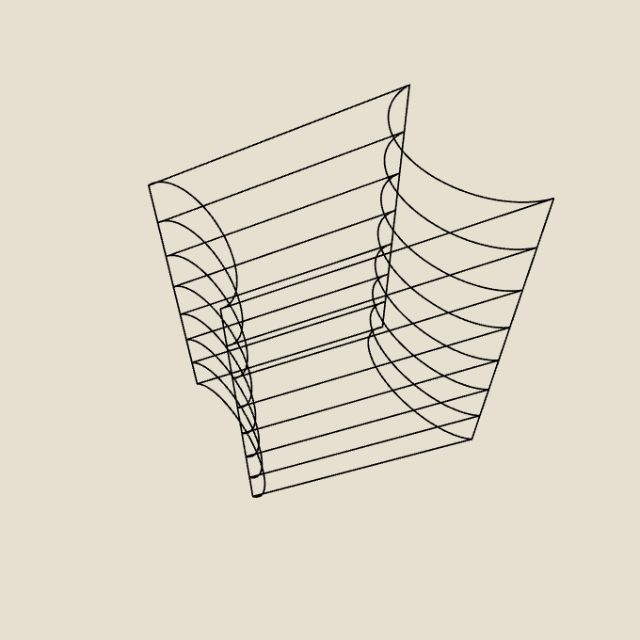
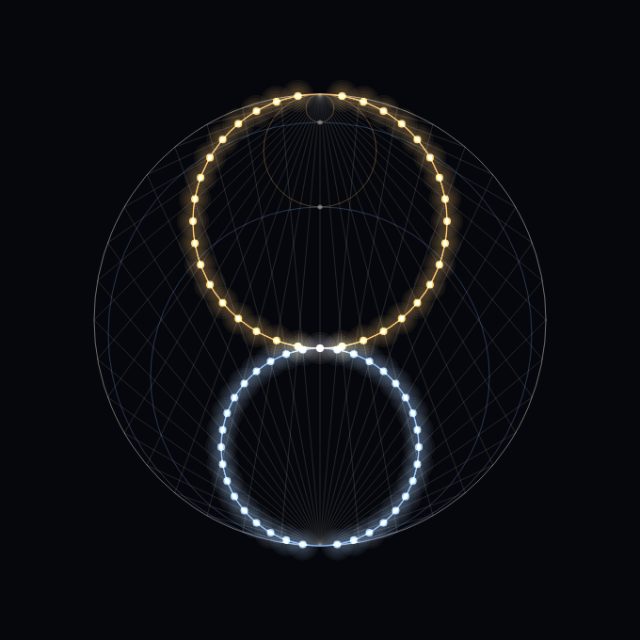
SourceThe Same Tower
The same tower appears round from afar and square from nearby.
— Sextus Empiricus, Outlines of Pyrrhonism I.118 -
 moving
Source
moving
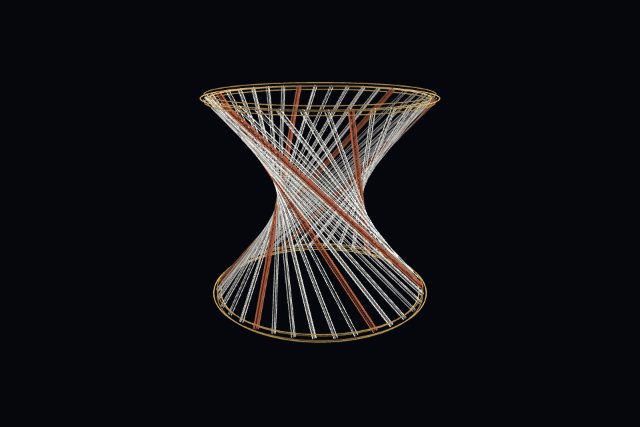
SourceAll on One Circumference
They will always be seen together on the circumference of circles growing successively larger.
— Galileo Galilei, Two New Sciences, third day (1638) -
 moving
Source
moving
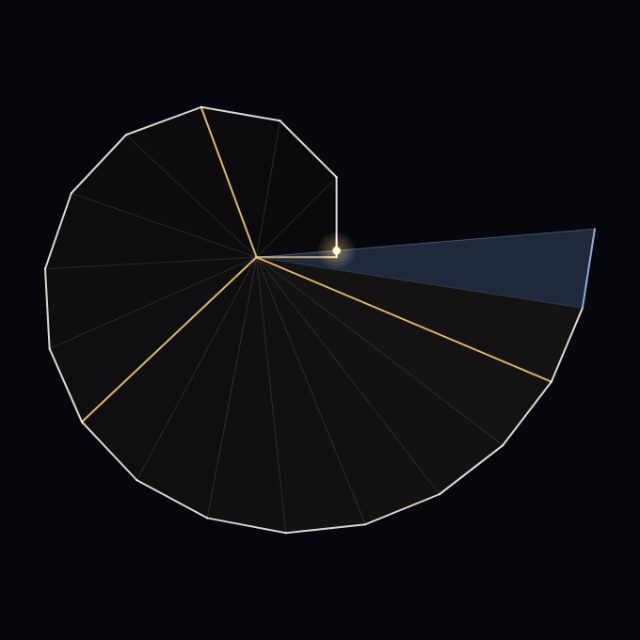
SourceInnumerable Straight Lines
On the surface of a cylindroid, though doubly curved, infinitely many straight lines can be drawn.
— Christopher Wren, Philosophical Transactions, no. 48 (1669), p. 962 (1669) -
 moving
Source
moving
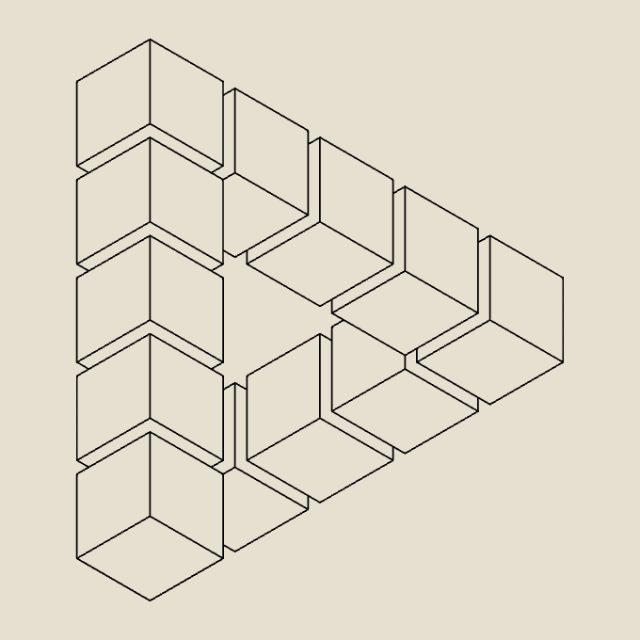
SourceThe Seventeen-Foot
Taking each in turn, he went as far as the root of seventeen; there, somehow, he stopped.
— Plato, Theaetetus 147d -
 moving
Source
moving
SourceEyed Awry
Like perspectives, which rightly gazed upon show nothing but confusion; eyed awry, distinguish form.
— William Shakespeare, Richard II, II.2 (1597) -
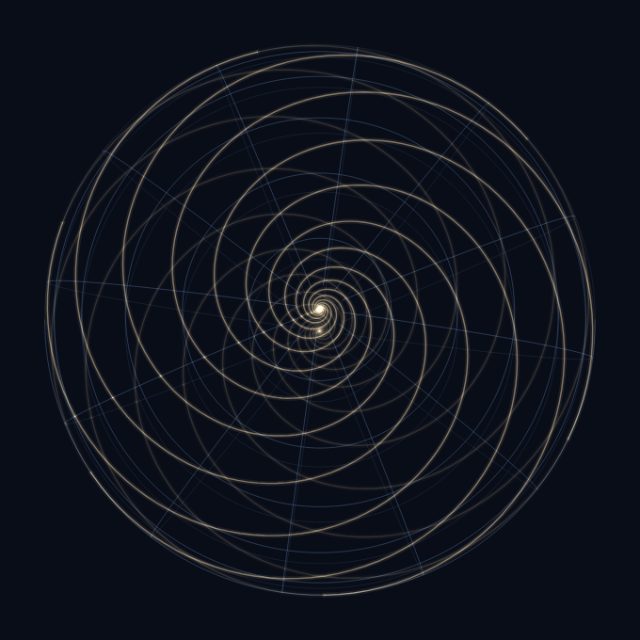 moving
Source
moving
SourceLoxodrome
The voyage of the best ship is a zigzag line of a hundred tacks. … See the line from a sufficient distance, and it straightens itself to the average tendency.
— Ralph Waldo Emerson, Essays: First Series — Self-Reliance (1841)
Generative Art
Life beyond utility is the domain of sovereignty.
— Georges Bataille, The Accursed Share, vol. III